“Smelled it before I tasted it: strawberry, sweet, unmistakable. Then it hit the tongue and, somehow, never turned sour.”
Ana Sora
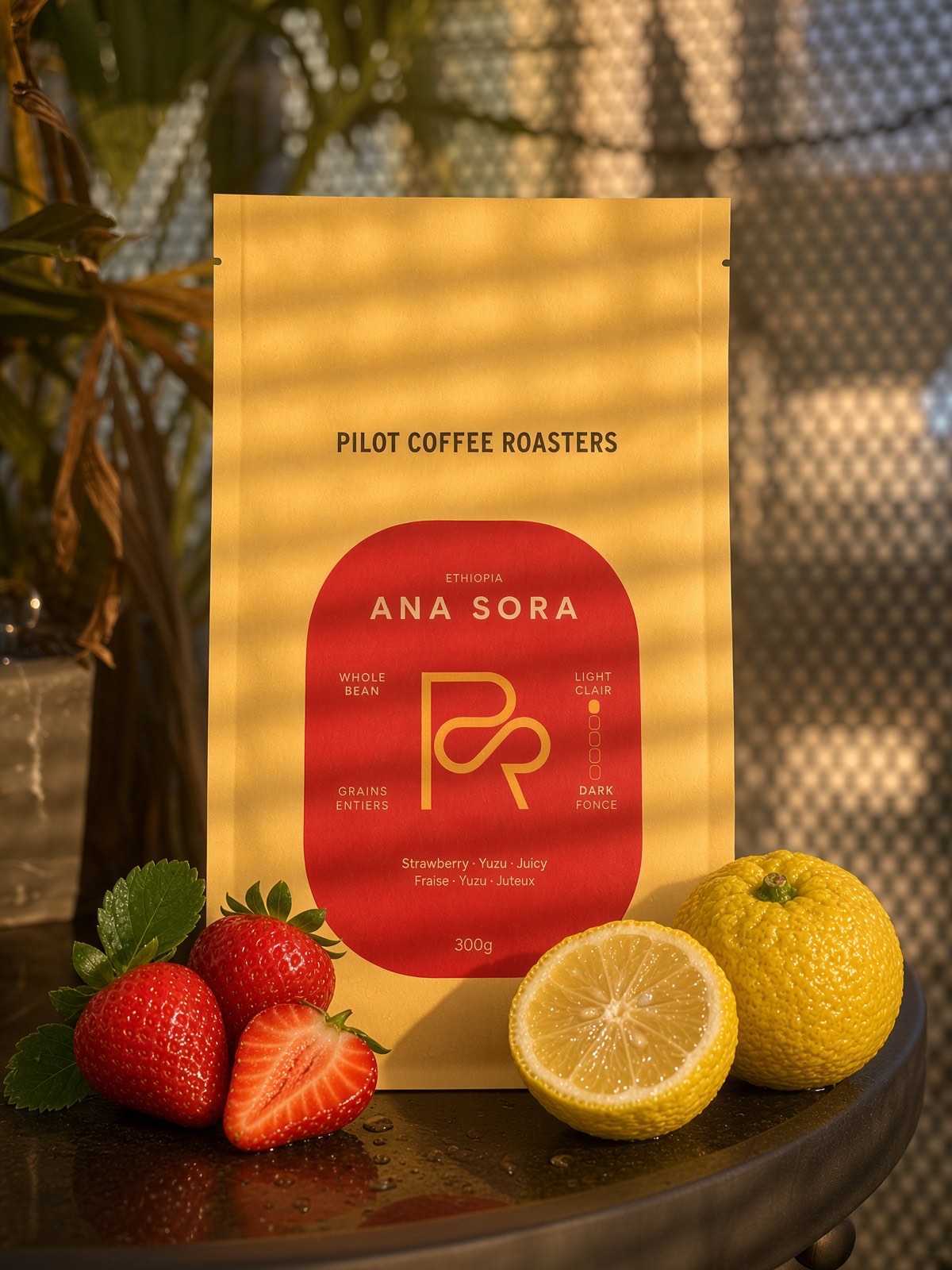
Guji, Oromia, Ethiopia · Natural · Pilot Coffee Roasters →
The bag did not smell like coffee.
It smelled like someone had opened strawberries in the kitchen.
The bag
One pull of the zipper and I knew the cup would be fruit-first. Not “fruity for a coffee.” Actual fruit. I had never gotten that from a bag before.
The sip
Same ritual: double espresso. First taste landed exactly where the nose pointed: strawberry, sweet, no hedging.
The twist
Fruity coffees usually turn on you. Acid up front, sour on the way out. This one never did. Smooth the whole sip. No sourness. Best cup I’ve had.
Why it stuck
It’s how the morning starts now, even at work. Seasonal, so I’m already waiting on next year’s lot.
How it was made
Natural process → the pulp stays on the cherry and ferments on the bean. That fermentation is the skill, and that is why the cup tastes like fruit instead of bite.
Birthplace
Ethiopia is considered the birthplace of coffee. This cup is a clear example of that heritage: fruit-first Guji, natural process, no sour fade.
It does not taste like a generic espresso. It tastes like Ethiopian coffee showing up as itself.

The verdict
9.4/10
“Smooth the whole sip. No sourness. Best cup I’ve had.”
Character
- Acidity
- 5
- Sweetness
- 9
- Body
- 6
- Bitterness
- 2
- Fruit
- 10
- Cocoa
- 1
Intensity, not quality. A low number is a different coffee, not a worse one.
Quick facts
- Origin
- Guji Zone, Oromia Region, southern Ethiopia
- Farm
- Ana Sora Washing Station
Israel Degfa / Kerchanshe Coffee - Altitude
- 1,900–2,350 m why →
- Process
- Natural why →
- Variety
- Landrace
- Roast
- Light
- Roast date
- 21 Aug 2026 rest →
- Roaster’s notes
- Strawberry, yuzu, juicy
Guji Zone, Oromia
Ethiopia is the birthplace of coffee, and this Guji lot is a strong representation of that lineage. Cherries ripen slowly at soaring altitude before being sorted in float tanks and naturally processed, a combination that produces an audacious, fruit-forward cup. The Guji Zone sits in Ethiopia’s Oromia Region, a semi-arid landscape of distinct wet and dry seasons, named for the Oromo people who have grown coffee here for generations. Behind this particular lot is Israel Degfa, owner of the Ana Sora Washing Station and CEO of Kerchanshe Coffee, Ethiopia’s most recognised producer and exporter. His combination of state-of-the-art processing and extreme growing altitude is what makes this cup one of a kind.